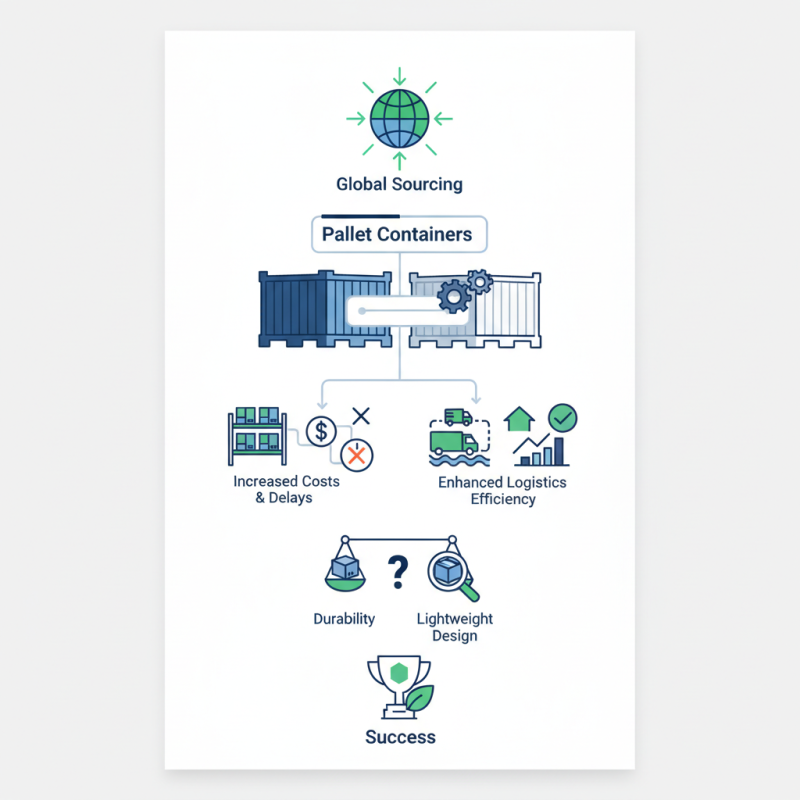
In the realm of global sourcing, "Pallet Containers" play a pivotal role. Renowned supply chain expert, John H. Evans, asserts, “Effective sourcing relies heavily on efficient packaging solutions.” His insight highlights the strategic importance of selecting the right containers, especially in diverse markets.
A well-designed pallet container can significantly enhance logistics efficiency. These containers not only optimize storage space but also safeguard goods during transit. Choosing the right materials and sizes can be critical, yet many overlook this key aspect. This oversight often leads to increased costs and delays in the supply chain.
The market is filled with options, but understanding which pallet container suits your needs requires expertise. While some containers offer durability, others prioritize lightweight design. Therefore, careful consideration is paramount. Evaluating the specific requirements of your product can help in making informed choices. Balancing cost with functionality remains a challenge. In this competitive landscape, leveraging the best pallet containers can make the difference between success and inefficiency.
Pallet containers have become essential for efficient global sourcing. Their design supports optimal handling and storage. Understanding their key features can enhance supply chain performance.
Durability is a critical aspect. Quality materials ensure that pallet containers withstand the rigors of transportation. Additionally, the stackable design saves space, facilitating better warehouse organization. Consider containers with customizable dimensions. They can accommodate various products, reducing the need for additional equipment.
Tip: Assess the weight capacity before choosing a container. Overloading can lead to damage or loss.
Another vital feature is the ease of cleaning. Hygiene is crucial, especially in food and pharmaceutical industries. Pallet containers made of smooth, non-porous materials allow for effective cleaning. This prevents contamination and maintains product integrity.
Tip: Regularly inspect and maintain containers to ensure longevity.
However, not all pallet containers meet the necessary standards. Some may lack proper certifications. Research suppliers to avoid future complications. Inadequate containers can lead to damaged goods and increased costs. Flexibility in sourcing processes is essential. Choose designs that can adapt to changing needs over time.
This chart illustrates the key features that contribute to the efficiency of global sourcing for pallet containers, highlighting aspects such as cost-effectiveness, durability, storage efficiency, weight capacity, and environmental impact.
Pallet containers play a crucial role in international trade. Various types of these containers are utilized to facilitate efficient global sourcing. The most common types include collapsible, rigid, and bulk pallet containers. Each type has unique features that cater to different shipping needs.
Collapsible pallet containers are favored for their space-saving capabilities. When not in use, they can be folded down, which reduces shipping costs. Rigid containers, on the other hand, provide added security and are durable for long-haul transport. Bulk pallet containers are typically used for bulk materials and can withstand heavy loads effectively.
Despite their advantages, some challenges arise. For instance, collapsible containers may not provide sufficient protection for fragile goods. Rigid containers could be more expensive upfront. Understanding these nuances is essential for efficient sourcing. Proper selection of pallet containers can enhance shipping efficiency and reduce waste in the supply chain.
Pallet containers are becoming essential in supply chain optimization. They offer several advantages, including improved efficiency and reduced costs. According to a report by the International Supply Chain Institute, companies can increase their shipping efficiency by up to 30% by using standardized pallet containers. This standardization simplifies stacking and storage, which can significantly enhance warehouse space utilization.
Moreover, pallet containers contribute to sustainability efforts. A study by the Environmental Protection Agency noted that reusable containers like pallet boxes minimize waste. By switching from single-use packaging to pallet containers, businesses can decrease packaging waste by an estimated 50%. This transition is not just eco-friendly; it also leads to cost savings over time.
However, some challenges remain. Not all suppliers may be equipped to handle pallet containers efficiently. This discrepancy can lead to delays and increased labor costs. Companies must analyze their entire supply chain to address these gaps. Proper training for warehouse staff is crucial to fully leverage the benefits of pallet containers. Balancing connection and efficiency is essential for maximizing the potential of these containers in global sourcing.
Choosing the right pallet container is crucial for efficient global sourcing. The decision impacts logistics, cost, and storage. Start with understanding your product's dimensions and weight. This knowledge helps in selecting a container that ensures safety and minimizes damages during transit.
Tip: Always measure your items. Exact dimensions help in avoiding overpacking or underutilization of space. Efficiency in shipping can be drastically improved with a well-suited container.
Consider the material of the pallet container. Different materials serve various purposes. Plastic containers resist moisture but may not support heavy loads. Wooden containers are sturdy but can be affected by humidity. Reflect on your specific needs before making a decision.
Tip: Evaluate how the container will be used. If products are stored in high-humidity areas, select accordingly. Missteps can lead to increased costs and waste.
Lastly, consult experts and peers in your industry. Their insights can highlight common pitfalls in container selection. Relying on shared experiences fosters a more informed choice.
Tip: Network within your industry. Engaging with others can lead to discovering new best practices in pallet container selection.
Pallet containers are transforming global sourcing efficiency. Case studies show their impact in various industries. One such study in the automotive sector revealed a 30% reduction in transportation costs when using standardized pallet containers. This reduction translates to significant savings over time, highlighting the importance of proper container selection.
A significant finding from a recent industry report highlighted that companies using pallet containers improved their inventory turnover rates by 20%. This increase reflects better space utilization and reduced handling times. Another example can be seen in the food industry, where perishables transported in pallet containers experienced a 25% reduction in spoilage rates. Efficient stacking reduces air exposure, preserving product quality.
**Tip:** Evaluate your sourcing needs before selecting pallet containers. Consider size, weight, and durability.
**Tip:** Collaborate with suppliers who understand pallet container specifications. They can suggest solutions tailored to your requirements.
While the benefits are clear, the transition can present challenges. Some companies report initial resistance to changing established processes. Training and awareness are crucial in overcoming these hurdles. Efforts in developing a culture of adaptability can lead to long-term gains.
: Pallet containers are designed for durability, stackability, and ease of cleaning. These features enhance supply chain efficiency.
Durable containers withstand transportation challenges. Quality materials prevent damage and loss during logistics processes.
Stackable designs save space. This allows for better organization and efficient use of warehouse resources.
Always assess the weight capacity. Overloading containers can lead to damage, loss, or increased shipping costs.
Hygiene is vital, especially for food and pharmaceuticals. Smooth materials allow for effective cleaning and contamination prevention.
Not all containers meet necessary certifications. Verify suppliers to avoid issues with damaged goods and increased costs.
Different materials serve different purposes. Choose materials based on humidity and load requirements to prevent waste.
Measure your products accurately. Correct dimensions help avoid overpacking, ensuring safe transit and efficient space utilization.
Industry insights can expose common mistakes. Networking fosters informed decisions and reveals best practices on container use.
Neglecting maintenance can lead to reduced container lifespan. Regular inspections prevent costly issues in the future.
Pallet Containers play a crucial role in enhancing efficiency in global sourcing by providing structural integrity and optimal space utilization. Key features such as durability, stackability, and ease of transportation make them ideal for handling goods in international trade. Various types of pallet containers, such as foldable, rigid, and bulk containers, cater to diverse shipping needs, thereby improving the supply chain process.
The benefits of using pallet containers include cost reduction, reduced risk of damage, and increased loading efficiency, all of which contribute to supply chain optimization. Best practices for selecting the right pallet container emphasize understanding specific cargo requirements and considering the container's compatibility with existing logistics systems. Real-world case studies highlight successful implementations of pallet containers, showcasing their effectiveness in streamlining sourcing processes and improving global trade operations.

Huiyuan Plastic